 By
By Spatial computing is ushering in a new era in technology, blending digital content seamlessly with our physical environments to create immersive, context-aware experiences. From transforming industries to introducing intuitive interfaces, spatial computing is poised to redefine how humans interact with computers, machines, and each other.
What Is Spatial Computing?
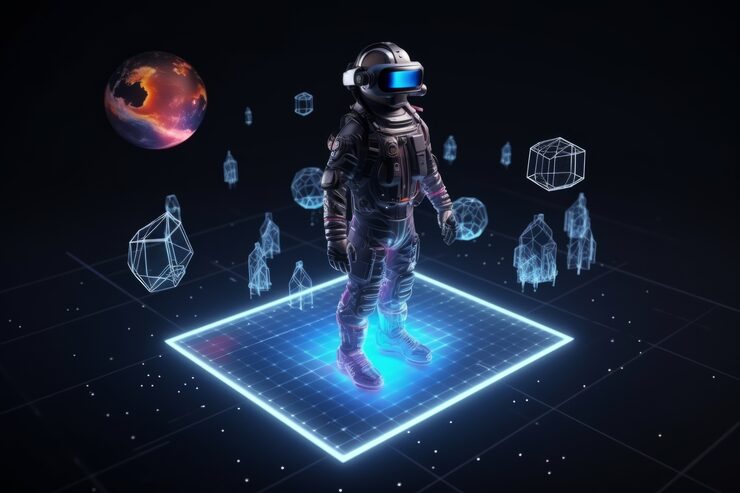
At its core, spatial computing refers to the process of merging digital data with the real world in real time, allowing interaction with information and objects as naturally as we do with physical things. The technology leverages sensors, computer vision, artificial intelligence (AI), augmented reality (AR), and virtual reality (VR) to create interactive three-dimensional (3D) experiences that go beyond traditional screens and keyboards.
With spatial computing, almost any surface can serve as a digital interface, allowing users to use gestures, voice, or even their eyes to control and manipulate virtual content within their physical surroundings. This new paradigm of interaction is breaking boundaries, enabling new forms of human-computer collaboration and visualization.
Key Features of Spatial Computing
-
Environmental Awareness: Devices equipped with spatial computing understand and map physical environments using advanced sensors. This enables digital content to interact contextually with real-world objects and spaces.
-
Immersive User Interfaces: By combining AR and VR, spatial computing creates highly immersive, intuitive interfaces, where users can engage with 3D objects as if they were tangible.
-
Natural Interaction: Control shifts from keyboards and mice to hand gestures, voice commands, and gaze tracking, making digital interaction more accessible and user-friendly.
-
Collaborative Capabilities: Multiple users can interact in shared virtual spaces, fostering real-time collaboration regardless of physical location.
-
AI Integration: AI enhances spatial computing by interpreting context, personalizing experiences, and analyzing spatial data for smarter decision-making.
Real-World Applications of Spatial Computing
1. Healthcare:
Spatial computing enables surgeons to visualize intricate anatomical structures in 3D, improving surgical precision and outcomes. It’s also revolutionizing medical training with interactive simulations.
2. Education and Training:
Students and professionals can engage in hands-on, interactive learning. For instance, Boeing and Walmart employ spatial computing for detailed, realistic employee training simulations.
3. Design and Architecture:
Designers and architects use spatial computing to visualize, manipulate, and present complex 3D models within real-world contexts, streamlining the design and prototyping process.
4. Logistics and Smart Buildings:
Facilities leverage spatial computing for real-time tracking, resource optimization, and creating energy-efficient smart environments that respond dynamically to occupancy and activity.
5. Retail and Customer Experience:
Retailers deploy AR applications that let customers visualize products in their homes before purchase. Real estate businesses offer immersive virtual tours, enhancing remote buying decisions.
6. Entertainment and Gaming:
Spatial computing brings digital games and narratives into the physical world, offering deeply engaging mixed-reality entertainment experiences.
7. Accessibility:
Spatial computing holds immense promise for accessibility, with AR navigation for visually impaired users and customizable virtual experiences for those with cognitive or mobility challenges.
Future Outlook: The Next Digital Revolution
Spatial computing is not just about entertainment or niche applications—it’s a transformative force predicted to reach a global market size of $1.7 trillion by 2033, up from $110 billion in 2023. As devices become lighter, more affordable, and widely integrated, spatial computing will play a pivotal role in business innovation, education, healthcare, manufacturing, and daily life.
Challenges remain, including high hardware costs, integration complexities, and privacy considerations related to the extensive personal data such systems collect. However, as technology advances and standards emerge, these hurdles are expected to be overcome, unlocking even greater potential for individuals and organizations worldwide.
Conclusion
Spatial computing is radically changing the way we interact with digital information and the physical world. By merging AI, computer vision, and immersive technologies, it delivers more intuitive, efficient, and engaging experiences. Companies and consumers alike are beginning to realize its potential, finding new ways to solve problems, improve productivity, and create value. As spatial computing matures, it will seamlessly connect the digital and the real, fundamentally transforming society and the nature of human-computer interaction.